
Interview with Dr. Colin Conrad, CDT Co鈥慏irector
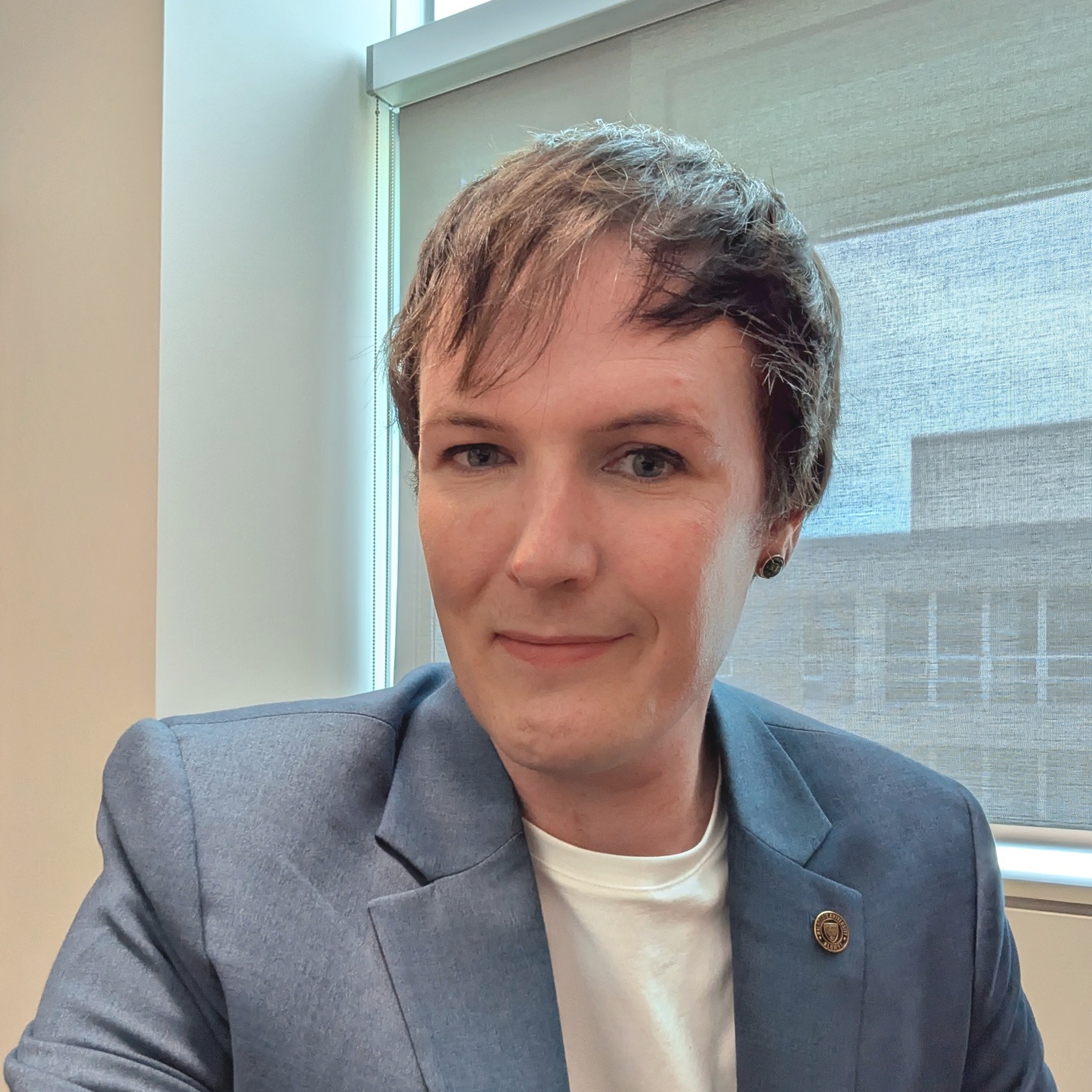
Dr. Colin Conrad has acted as Co-Director of the College of Digital Transformation since the College鈥檚 formation. Stepping down from this leadership role imminently in July 2026, Dr. Conrad took the time to reflect on the establishment of the CDT, its founding mission and values, changes in the digital transformation ecosystem, and the future of the College.
Co-Director of the CDT, Richard Evans, notes "Working with Colin to launch the College of Digital Transformation has been a genuine pleasure. Their dedication to reducing the gap between Computer Science and Management, and commitment to student-led innovation and work-integrated learning, have laid the foundation for the future work that will be completed by the CDT. We thank them for their vision and leadership, and we are delighted that they will remain a core member of our research team! As we build upon this foundation, the College is entering an exciting new chapter. With our first Summer School on Digital Transformation this August, alongside upcoming seminar series and expanded scholarship opportunities, there is much to look forward to... we encourage our community to keep a close eye on our website and LinkedIn channel for upcoming announcements!"
Looking back on your time as Co-Director, what accomplishments or moments are you most proud of?
听
There are several moments that stand out, each meaningful in its own way. One of the most memorable was joining a trade mission to Estonia on behalf of Nova Scotia. While there, we engaged with the Creative Destruction Lab in the Baltics and began exploring the possibilities for collaboration. Most of those conversations ultimately found their expression through work with NATO Diana, though I believe there are promising partnerships with Estonia still on the horizon.
Closer to home, I am especially proud of securing the Scotiabank Gift. This is not simply a financial contribution, it鈥檚 an investment in students and in equity. The gift is designed to deepen students' exposure to meaningful applied and work-integrated learning experiences, and crucially, it helps remove barriers in STEM for individuals from marginalized communities through both financial support and mentorship.
Launching the Digital Transformation scholarships program is another accomplishment I hold in high regard. We created scholarships for our master's and PhD students, and we have also laid the groundwork for an innovative undergraduate scholarship that would support students in exploring digital transformation. I hope that takes shape in the years ahead.
Finally, I am proud of the Digital Innovation Projects work-integrated learning option. This was designed as an alternative to a traditional co-op, allowing students to work on a real digital transformation challenge with a non-profit or small business, supported by a grant of $5,000.听
鈥淚t is the kind of initiative that can genuinely change how a student understands the connection between learning and practice.鈥�
听
When you first stepped into the role, what vision did you have for the College of Digital Transformation, and how has that vision evolved over time?
听
There is a story I always think back to when reflecting on this question. The former Dean of Computer Science, Andrew Rau-Chaplin, used to talk about his dream of building a literal, physical, bridge over the street connecting the Goldberg and Rowe buildings. That bridge was never built, but in many ways, the College of Digital Transformation is the bridge he envisioned. It brings together disciplines that had long operated in parallel, and asks them to meet in the middle.
鈥淲hen I first stepped into this role, my vision was grounded in that spirit of connection.鈥�
听
I wanted to create a unit that could tackle the real human problems at the intersection of technology and society鈥攖he problems that are too complex for any single discipline to address alone. That means drawing on Computer Science and Management, yes, but also welcoming other perspectives that enrich our understanding of how digital transformation actually unfolds in people's lives.
Over time, that vision has grown more expansive. I hope the College will increasingly serve not just the interests of industry and economic growth, but also the broader dimensions of society where digital technology is rapidly reshaping everyday life, such as in education (my passion), health, governance, culture. The opportunities are significant, and so is the responsibility.
What have been the most important lessons you've learned about leading a multidisciplinary community focused on digital transformation?
听
The most fundamental lesson I have learned is that different disciplines carry different cultures with them, and those cultures shape how people think, what they prioritize, and how they prefer to work. Faculty and professionals from Management tend to be oriented toward action and implementation. Those from Computer Science are often energized by research and discovery, and may be less drawn to administrative processes. Neither orientation is better than the other, but understanding that difference is essential for anyone trying to lead across those lines.
The deeper lesson, though, is about the value of embracing diversity, not just the diversity of individuals, but the diversity of ideas. Multidisciplinary work can feel like herding cats. It is slow, sometimes frustrating, and rarely straightforward. But that friction is where something genuinely new can emerge.听
鈥淭he most meaningful insights and the biggest ideas don't come from consensus within a single tradition. They come from the productive tension between traditions, and their resolution.鈥澨�
听
Learning to sit with that uncertainty, and to trust the process even when it feels messy, has been one of the most important things this role has taught me.
Are there any students, faculty, projects, or partnerships that particularly stand out as examples of what makes the College unique?
听
I want to start by recognizing the Master of Digital Innovation program. We had the MDI long before we had the College, and in that sense it represents the spirit of collaboration between 17吃瓜网在线's faculties that the College was built to formalize and expand. Some of the most outstanding people I have encountered in my career came through that program and its predecessors. Leaders like Grant Sullivan, Matthew Butler, Gabriella Mosquera, Ardi Iranmanesh, Jane Burakova, Suchindra Karthik, Carlos Calix Woc, Gabriel Diaz, and Stacy Taylor, all of whom are making real contributions in their fields today. Of course, my own supervised MDI thesis students: Juan Chaves, Hinda Shakeeb, and Kya Masoumi are equally remarkable, and I am deeply proud of the work they are doing.
On the faculty side, I am especially interested to see where the College goes as it builds its own academic identity. FE Bordeleau was hired as the first faculty member truly appointed to the College, and that moment feels significant to me. Also, they鈥檙e great and a fantastic colleague! Whether that trend continues and whether the College grows its own scholarly community with a distinct identity, will say a great deal about its future.
As you prepare to step down, what are your hopes for the future of the College of Digital Transformation, and what advice would you offer to those who will carry its mission forward?
听
My strongest hope is that the College will invest more deeply in community partnerships. Early in my time as Co-Director, I was actively engaged in the Halifax community. I attended a lot of events, built a lot of relationships, and stayed connected to the people and organizations working on the front lines of digital change. Due to personal circumstances, I had to pull back from much of that. But those connections matter, and I think they are essential to the College's mission.
My advice to whoever carries this work forward would be to make that outreach a genuine priority. Attend events at Volta. Show up at AI Con. Consider extending your presence to national conversations happening in the applied digital transformation space. The College's credibility and relevance depend not just on what happens inside our buildings, but on how actively we engage with the broader ecosystem of people and organizations who are living the transformation we study.
What has this experience meant to you personally, and what is next for you?
听
It has been a genuine honour. Working alongside Richard Evans to launch the College was one of the most meaningful professional experiences of my life.听
鈥淚 suspect I am better suited to getting something off the ground than to the longer work of running it, and the timing of this transition feels right for that reason.鈥�
听
As for what comes next: I have had some significant changes in my personal life, and those will be a focus for me in the period ahead. Professionally, I am returning my attention to my research and to my lab, the Cognition and Organizations Research Group. The CORG has always been where my deepest intellectual work lives, and I am looking forward to giving it the energy it deserves. I also hope that the lab's work will continue to intersect with the College's mission. The questions we are asking about how people think, work, and organize in a digital world will remain relevant to what the College is trying to do.
Thank you, Dr. Conrad, for the time and energy you have devoted to the College. Your efforts have helped shaped digital transformation and innovation in research and practice at 17吃瓜网在线 and beyond and are truly appreciated. Dr. Conrad will remain a core member of the CDT and will continue to offer key expertise and experience to advance the College鈥檚 key initiatives.